Garage Door Accessories for Efficient and Safe Operation


A garage door is often the largest moving object in a home, and it tends to be ignored until it starts making noise, sticking halfway, or refusing to close on a rainy night. That neglect is understandable. When the door works, it fades into the background. Yet the difference between a garage door that merely opens and closes and one that does the job safely, quietly, and reliably usually comes down to accessories.
That word can sound optional, as if these products are decorative add-ons. In practice, many garage door accessories have a direct effect on safety, convenience, wear on the system, and even household security. Some are simple, like upgraded weather seals or a better wall control. Others, such as battery backup units, monitored safety sensors, and smart control modules, can change how the door performs in real conditions, not just on a showroom floor.
Homeowners often focus on the door panels and the opener motor, which makes sense. Those are the most visible components. But after years around residential garage systems, I have seen the same pattern again and again. A solid door with the wrong accessories becomes noisy, temperamental, or unsafe. A modest door with the Garage Door Accessories right supporting hardware often performs far better than expected. Good accessories do not just add features. They solve problems.
What “efficient and safe” actually means for a garage door
Efficiency in a garage door system is not just about electricity use, though that matters. It also means smooth travel, minimal strain on the opener, consistent sealing, fewer service calls, and less wasted time standing in the driveway hitting the remote again. Safety is broader than people realize as well. It includes preventing entrapment, reducing the chance of a forced entry, keeping fingers away from pinch points, and making sure the door can still be operated during a power outage.
A door that shudders on the way up, slams shut, or leaves a one-inch gap at the bottom is telling you something. The accessories around it may be outdated, poorly matched, or simply worn out. I have walked into garages where the owner was convinced the opener was dying, only to find cracked rollers, a damaged bottom seal, and misaligned photo eyes. Once those were corrected, the entire system felt new again.
That is why it helps to think of garage door accessories not as gadgets but as functional parts of a working system. The right upgrades are rarely flashy. They are the ones you stop noticing because the door becomes predictably easy to live with.
The accessories that directly affect safety
If there is one category where cutting corners makes no sense, it is safety accessories. Modern doors are much safer than older models, but only when all the protective components are present, aligned, and functioning.
Photo eye sensors are the obvious starting point. Mounted a few inches above the floor on both sides of the opening, they project an invisible beam across the doorway. Break that beam while the door is closing, and the door should reverse. Many homeowners know they exist, but fewer appreciate how sensitive they are to small problems. Sun glare, bumped brackets, dirty lenses, loose wiring, and water intrusion can all cause erratic behavior. A sensor that works nine times out of ten is not working properly. That tenth failure is the one that matters.
Wall controls with lock and light functions are another understated safety feature. The lock mode, sometimes called vacation mode, disables remote operation. That is useful during extended travel or when a remote has gone missing. It is a simple measure, but it prevents a lot of avoidable security headaches. Upgraded wall stations may also include motion-activated lighting, which reduces trips and falls when someone enters through the garage carrying groceries or tools.
Manual release kits deserve more attention than they get. Every opener has an emergency release cord, but not every installation makes it easy or safe to use. In garages with high ceilings, heavy doors, or limited access, a better-positioned release kit can make a genuine difference during an outage or opener failure. If the garage is the primary household entry point, that is not a minor concern.
There is also a category of accessory that protects hands and limbs indirectly by improving door stability. Reinforcement struts, better hinges, and upgraded track hardware are not always marketed as safety products, but they reduce wobble, racking, and uneven travel. When a door binds or jerks, people tend to step in and try to help it along. That is when injuries happen.
Remote controls, keypads, and the real meaning of convenience
Convenience accessories are often dismissed as luxury items until someone lives without them for a week. Then their value becomes obvious.
A quality remote control matters more than many people expect. Range, button feel, signal reliability, and battery life vary widely. Cheap remotes and aging remotes often create false alarms because the user blames the opener when the real problem is an inconsistent transmitter. In larger homes or detached garages, long-range remotes are especially helpful. They allow the door to begin opening before the car reaches the driveway apron, which reduces idle time and makes winter entry easier.
Wireless keypads are one of the most practical Garage Door Accessories available. Families with children, dog walkers, house sitters, and service providers quickly appreciate them. They eliminate the need to hand out remotes and offer controlled access without keys. The best setups use rolling code technology and backlit keypads with large buttons that can be used in poor weather or low light. Placement matters. A keypad tucked too close to the moving door or mounted where rain constantly hits it will not age well.
There is also an important distinction between convenience and security. A keypad should Garage Door Accessories make entry easier for authorized users, not easier for everyone. That sounds obvious, but I still come across homes using simple, predictable codes, often a street number or birth year. A good accessory only works well if the user treats it seriously.
For households with multiple drivers, vehicle-integrated controls can be useful, but they are not always better than stand-alone remotes. Built-in car systems are neat and tidy, though older vehicles sometimes have compatibility issues or weaker performance. When reliability is the priority, a dedicated manufacturer-matched remote often performs best.
Smart control accessories that are worth the trouble
Smart garage accessories have matured. A few years ago, setup was often clunky and the apps felt like afterthoughts. Now, the better systems are genuinely useful, especially for busy households or for anyone who travels frequently.
A smartphone control module allows the user to open or close the door remotely, check whether it is open, and receive activity alerts. The practical value is immediate. You leave for work and cannot remember whether the door closed. Instead of calling a neighbor, you check the app. A package is being delivered to the garage. You can open the door for two minutes and close it again from anywhere with a signal.
That said, not every home needs this feature, and not every system benefits from it equally. If the garage Wi-Fi signal is weak, smart accessories become a source of irritation rather than convenience. I usually advise people to fix connectivity first. A strong opener paired with a poor network will still behave like a poor system.
Smart accessories also raise questions about privacy and account security. Two-factor authentication, unique passwords, and software updates are not optional details. They are part of the product. If a manufacturer has a weak app or a poor track record for support, the sleek interface does not matter much. Reliability is the real feature.
Some smart modules integrate with cameras, motion notifications, and geofencing. Those can be useful, but only if they match the household’s habits. I have seen people disable alerts within a week because the system was too chatty. The best smart accessory is the one that gives clear, limited information that you will actually use.
Battery backup and surge protection, two accessories people appreciate during the first outage
Power failures are where practical planning shows itself. A battery backup unit attached to a compatible opener can keep the door operational for multiple cycles when utility power is down. That matters more than many people realize, especially if the garage is the primary entrance or if a vehicle must be moved for work, school, or medical reasons.
In regions with storms, rolling outages, or cold weather, battery backup can move from convenience to necessity. It is one of those upgrades that feels unnecessary right until the morning the grid goes down and the car is trapped inside. I have heard plenty of homeowners say they did not think much about backup power until they had to release a heavy door manually in the dark. Most of them installed one afterward.
Surge protection is less glamorous but just as sensible. Modern openers contain control boards that do not always tolerate voltage spikes well. A surge protector designed for garage door equipment can help prevent expensive board damage. It is not a guarantee, but it is a low-cost layer of protection compared with replacing electronics after a summer storm.
These accessories work best as part of a realistic setup. A battery backup will not compensate for a door that is badly out of balance. If springs are weak or the tracks are dragging, the opener will struggle, and the backup will be less effective. Support accessories cannot overcome a mechanically unsound door forever.
Seals, thresholds, and insulation accessories that improve daily performance
When people think about garage door efficiency, they often jump straight to insulation values. Insulation matters, but so does keeping outside air, dust, moisture, and pests from sneaking in around the edges.
Bottom seals are among the most cost-effective Garage Door Accessories on the market. A worn or flattened seal can let water blow in under the door, allow heated or cooled air to escape, and leave enough of a gap for insects or rodents. Replacing it can tighten up the entire opening. The trick is choosing the right profile for the door and the floor condition. Not every garage slab is level. In older homes, it rarely is. In those cases, a universal seal may not perform as well as a style designed to adapt to uneven surfaces.
Threshold seals mounted to the floor can help where water intrusion is persistent, particularly on driveways that slope toward the garage. They also improve the compression surface for the bottom weather seal. The downside is that they need proper bonding and occasional cleaning. If installed poorly, they can peel or create a nuisance for snow shovels and floor sweepers.
Perimeter weather stripping on the jambs and header is equally important. Brittle vinyl, cracked rubber, or strips that no longer contact the door evenly can undo much of the benefit of an insulated door. In attached garages, these small leaks matter more because they affect adjacent interior spaces.
Insulation kits for uninsulated metal doors can help moderate temperature swings and reduce panel vibration. Expectations should be realistic. An insulation kit will not turn a basic garage into conditioned living space. But in many climates it can make the room above the garage more comfortable, reduce radiant cold near the door, and soften some of the drum-like noise thin steel doors can produce.
Rollers, hinges, and hardware upgrades that make a door quieter and smoother
Some of the best improvements are almost invisible after installation. Rollers are a perfect example. Standard steel rollers can be durable, but they tend to get noisy as they age. Nylon rollers, especially those with sealed bearings, usually run much more quietly. On a bedroom-adjacent garage, that difference can be dramatic.
I remember one home where the owner was convinced the opener had become excessively loud. The motor was fine. The real problem was a set of worn rollers and dry hinges transmitting vibration through the framing. After replacing the rollers and servicing the hardware, the door sounded like a different system. The opener had not changed. The accessories around it had.
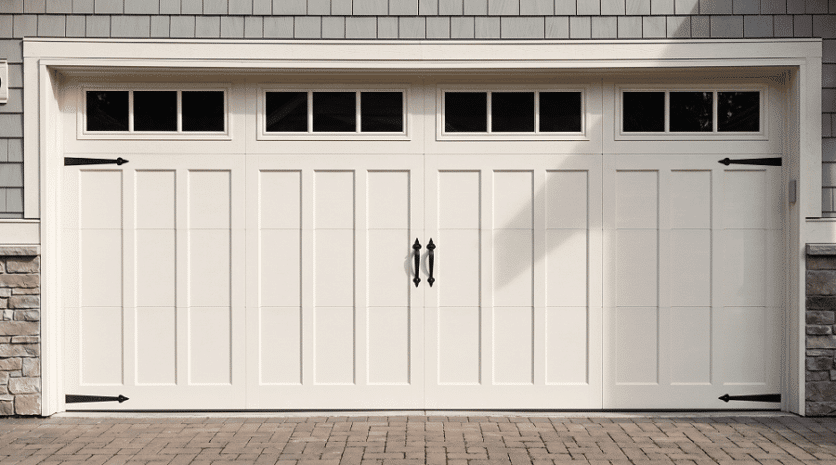
Heavy-duty hinges and reinforcement brackets can also improve long-term performance, particularly on wider doors or doors exposed to frequent wind pressure. Decorative hardware is another category people ask about, but here function should come before looks. Strap hinges and handles that are purely ornamental can enhance curb appeal, yet they need to be installed without interfering with movement, weather sealing, or finger clearance.
Lubrication accessories, including the right garage-door-safe lubricants, are worth mentioning too. Many people reach for general-purpose sprays that are not ideal for rollers, hinges, or springs. The wrong lubricant attracts dirt, drips onto vehicles, or degrades certain materials. A proper garage door lubricant used sparingly on the correct points is a maintenance accessory as much as a service item.
Lighting and visibility accessories that solve small but annoying problems
Lighting is often treated as an afterthought in garages, which is odd considering how often people use that space at dawn, dusk, or after dark. Opener-integrated LED lighting modules, motion-sensing fixtures, and upgraded bulb systems can make the area safer and more functional.
Not every LED bulb works well in every opener, which surprises people. Some bulbs create radio interference that shortens remote range. Others fail early because of vibration or temperature extremes. Bulbs labeled for garage door opener use are not just a marketing trick. They are usually built to handle rougher service conditions. If a remote suddenly starts behaving poorly after a light change, the bulb is one of the first things worth checking.
Motion-sensing side lights near the access door or inside the garage can also be valuable. They are especially useful in households where someone enters on foot while carrying children, tools, sports gear, or shopping bags. Better visibility reduces fumbling and improves footing around steps, thresholds, and stored equipment.
A backup light accessory tied to battery-supported opener operation can be a smart choice as well. During outages, being able to see the release cord, lock handle, or floor hazards is not a luxury.
Security accessories beyond the opener
A garage often contains more than a car. It may hold tools, bikes, lawn equipment, storage, and direct access to the house. For that reason, security accessories should not stop at the remote signal.
Garage door shields that protect the emergency release from fishing attempts can be useful in specific door configurations. This is particularly relevant where there is enough top gap for a would-be intruder to reach in with a tool. Not every setup is vulnerable in the same way, so this is a case where a tailored assessment matters more than buying the latest product.
Interior slide locks, when used properly, add another layer of protection for extended absences. They physically prevent the door from being raised. They are not for daily use with the opener engaged, but for vacations or long periods away they are simple and effective.
Camera accessories aimed at the garage interior or exterior can also deter theft and provide a useful record of door activity. Their best use is usually not dramatic crime prevention. It is the mundane stuff, confirming that the door actually closed, seeing when a teenager got home, or checking whether a service visit happened as scheduled.
Choosing accessories that fit the door you already have
Compatibility causes more trouble than most marketing materials admit. Not every accessory works with every opener, every track style, or every door construction. That is why the best buying process often starts with a simple inventory of what is already installed.
Opener brand and model matter. So do the age of the unit, the type of safety sensor system, the radio frequency, and whether the door uses extension or torsion springs. Insulation accessories should suit the panel design. Reinforcement parts should match the door width and gauge. Even something as simple as a bottom seal has to match the retainer shape.
This is one of the places where experience pays off. A homeowner sees “universal” on the package and assumes the job is straightforward. Sometimes it is. Sometimes universal means universal with trimming, shimming, adaptation, and a fair amount of patience. There is nothing wrong with do-it-yourself work when the task is appropriate, but it helps to know where surprises tend to show up.
When a professional install is the safer decision
Some accessories are easy to install with basic tools. Others are best left to a trained technician, not because the work is mysterious, but because the risk is real.
Anything involving spring tension, track realignment, opener force settings, or structural reinforcement should be approached carefully. The same goes for electrical accessories that tie into the opener circuit or require hardwiring. A poor install can create a system that looks finished but behaves unpredictably under load.
A common mistake is assuming the accessory itself is harmless because it is small. A wall console is small, but if it is wired incorrectly, the opener can malfunction. A reinforcement bracket is simple, but if it is mounted in the wrong location, it can weaken the panel or interfere with travel. A threshold seal is low-risk, but if it is positioned badly, the door may not close fully against it.
Professional installation is often less about speed than about calibration. Once an accessory is mounted, the door may need travel limits adjusted, force settings fine-tuned, or sensor alignment checked. Those details determine whether the upgrade actually improves the system.
Maintenance keeps accessories from becoming weak points
The best accessories still need periodic attention. Sensors get dusty. Keypad batteries die. Weather seals harden. Backup batteries age out. Rollers wear. Smart modules need occasional firmware updates. None of that is dramatic, but neglect turns good components into future service calls.
A garage door should be observed in motion a few times a year, not just used. Watch for hesitation, uneven closing, new noises, or lights on the opener panel indicating a fault. Test the auto-reverse function with a proper object according to manufacturer guidance. Clean sensor lenses. Check the keypad before guests arrive for the holiday weekend, not after someone has already locked themselves out.
That small rhythm of attention is what keeps Garage Door Accessories useful instead of ornamental. A lot of garage systems last longer than expected when owners catch little issues early.
The accessories that usually deliver the best value
If someone asked where to start with limited budget, I would usually point toward safety sensors if the system is outdated or unreliable, quality remotes or a keypad if daily access is clumsy, better rollers if noise is a problem, fresh weather seals if the garage leaks air or water, and battery backup if outages are common. Those upgrades tend to pay back quickly in convenience and reduced aggravation.
The most expensive accessory is not always the most valuable. A flashy smart ecosystem may be less useful than a quiet set of sealed nylon rollers and a bottom seal that finally keeps out rain. The right choice depends on how the garage is used. A detached workshop has different priorities than an attached two-car garage under a bedroom. A rental property calls for rugged simplicity. A family home may benefit more from controlled access and alerts.
What matters is matching the accessory to the friction point. Fix the thing that regularly annoys you or worries you. That is usually where the smartest investment sits.
A garage door is not a standalone slab of steel or wood. It is a moving assembly, and accessories are part of what determines whether that assembly feels dependable or temperamental. When chosen well, they improve safety without fanfare, reduce wear without being noticed, and make everyday use easier in the way good design often does. Quietly, consistently, and every single day.
Select Garage Doors
11479 Pine Dr, Parker, CO 80134, United States
+1 303-228-0018
FAQ About Garage Door Accessories
What are garage door parts called?
Common door components include panels, hinges, rollers, tracks, springs, cables, and weather seals. The opener is a separate operating system, with accessories such as remotes, keypads, and compatible smart controls. Identify the door and opener model before choosing a part; springs, cables, and other loaded components should be assessed and serviced by a trained garage door technician.
What garage door supplies do I need?
The right supplies depend on the problem or upgrade you want to address. Common accessories include replacement remotes, wireless keypads, weather seals, decorative handles and hinges, and compatible smart controls. Check model compatibility and the manufacturer's instructions before buying. A technician can inspect the system and recommend suitable accessories without replacing otherwise serviceable equipment.
Where can I find garage door accessories in Parker?
Select Garage Doors supplies and installs garage door accessories for Parker homeowners. Contact the company with your opener brand and model, door details, and the upgrade you want so it can confirm compatibility, availability, pricing, and installation requirements. Confirm collection or appointment arrangements before visiting.